SME Onboarding Flow Redesign
Redesigned the registration experience for SME users, increasing sign-up success by 77% and cutting form drop-off by 33%.
Timeline
Dec 5, 2022 to Jan 2, 2023 (4 weeks)
Team
Product Designer: Me Product Owner: Patrick Chan Developer: FE x 1
MY RoLE
Led the end-to-end product design process
Researched user pain points and competitor patterns
Proposed scope and roadmap with the product manager
Used Mixpanel data to guide design improvements
Overview
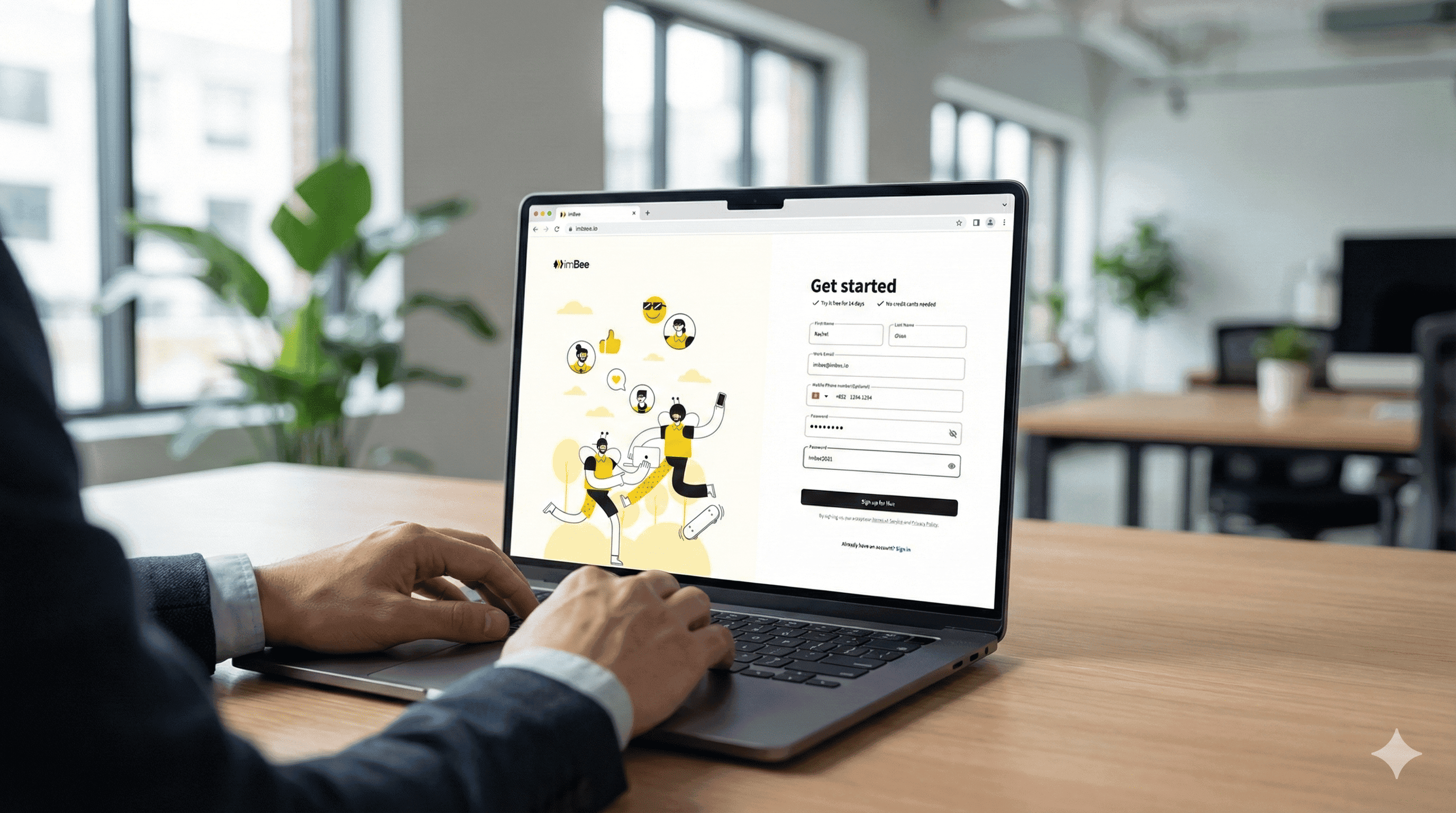
imBee is a subscription-based omnichannel product serving enterprise and SME customers.
As imBee expanded beyond enterprise clients, the existing registration flow became a critical growth blocker. New users were required to wait for an account manager to manually issue a trial link, causing delays, high drop-off, and unnecessary internal overhead.
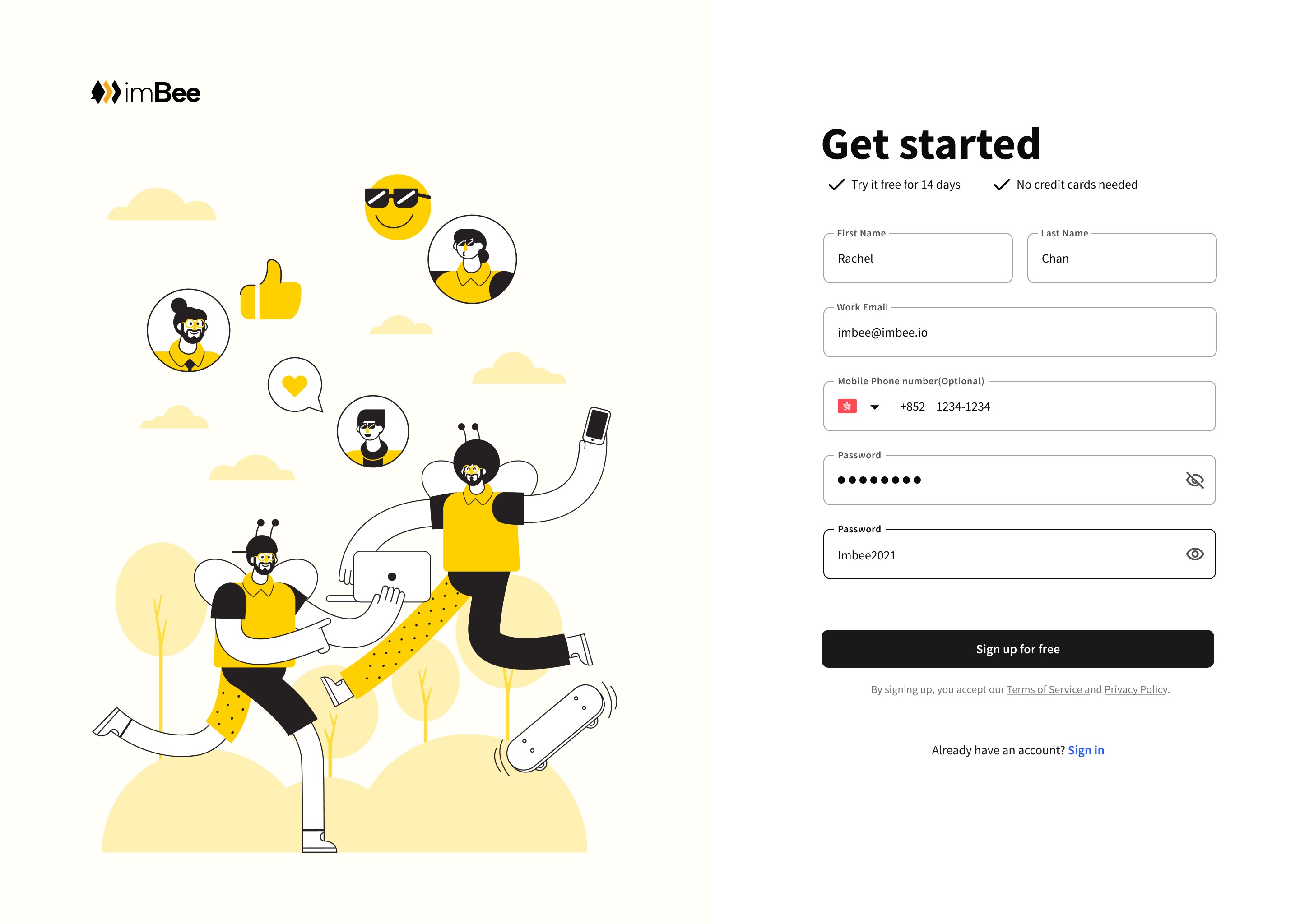
I led the redesign of the registration experience, converting it into a fully self-service onboarding flow that allowed users to sign up and start using the product immediately.
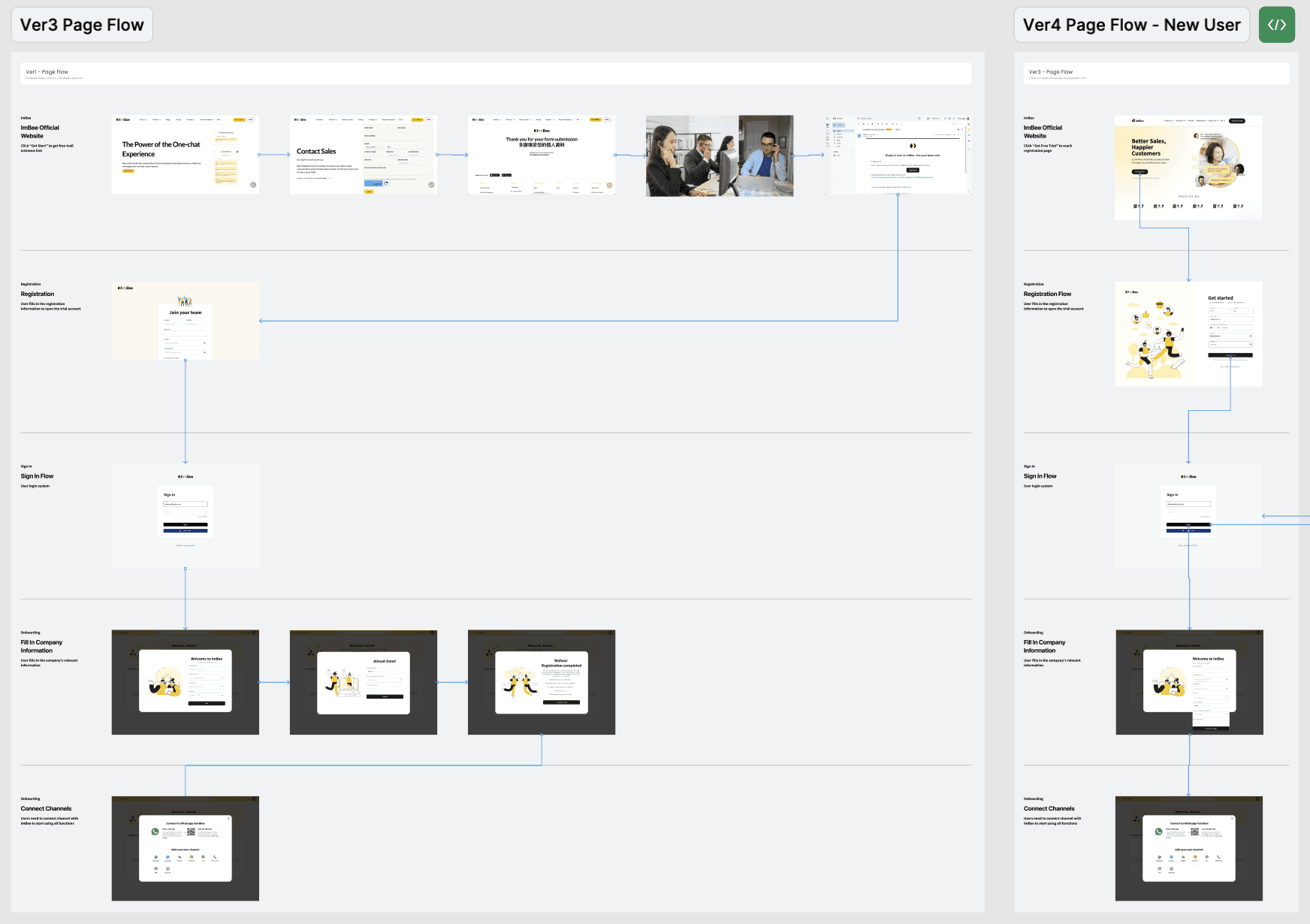
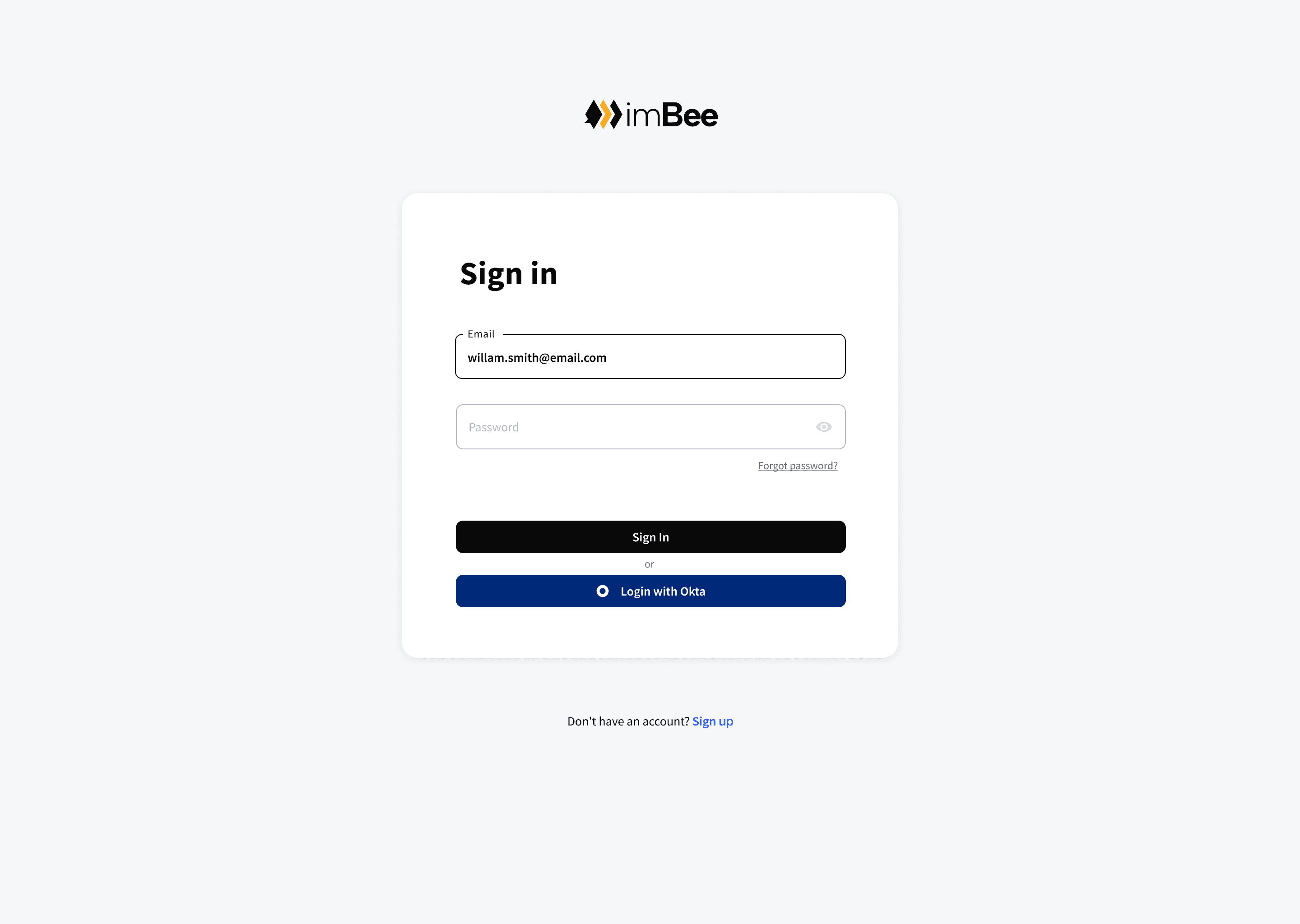
By reducing the registration flow from 11 pages to 5 and simplifying the onboarding form, the first release increased registration success by 77.11% and reduced drop-off from 37.5% to 33.33%, based on Mixpanel data.
Challenge
This project had a clear goal, but no clear direction — so I needed to figure out the solution by myself. The main challenges were:
Simplify the long and complex enterprise registration flow, and help users complete the registration by themselves (target: 70% completion rate)
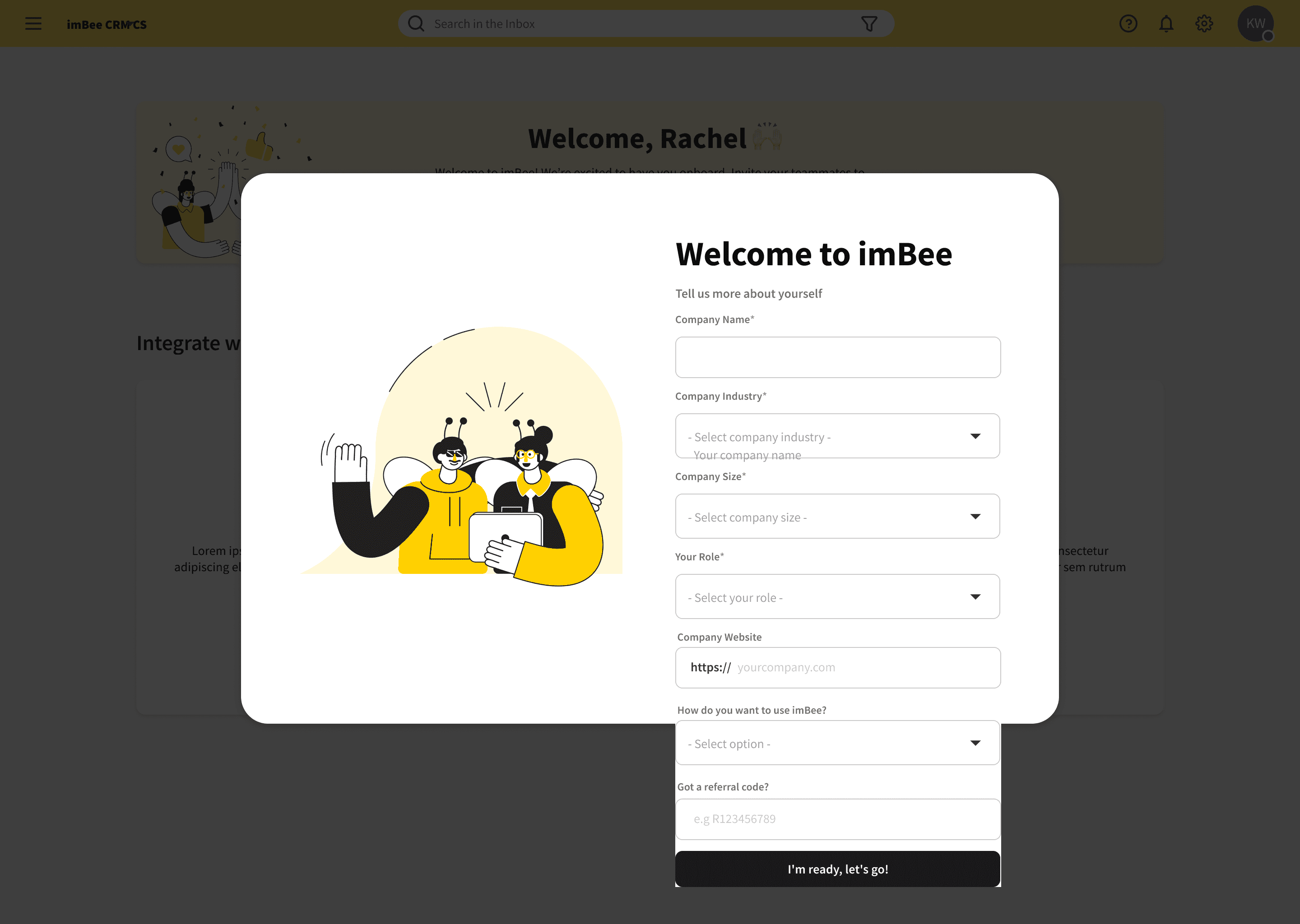
Make sure the new flow still collects all important customer info needed by internal teams
Check if the design is technically feasible, and define what features are needed in each phase
Plan a step-by-step rollout to improve the registration flow over time
Discovery
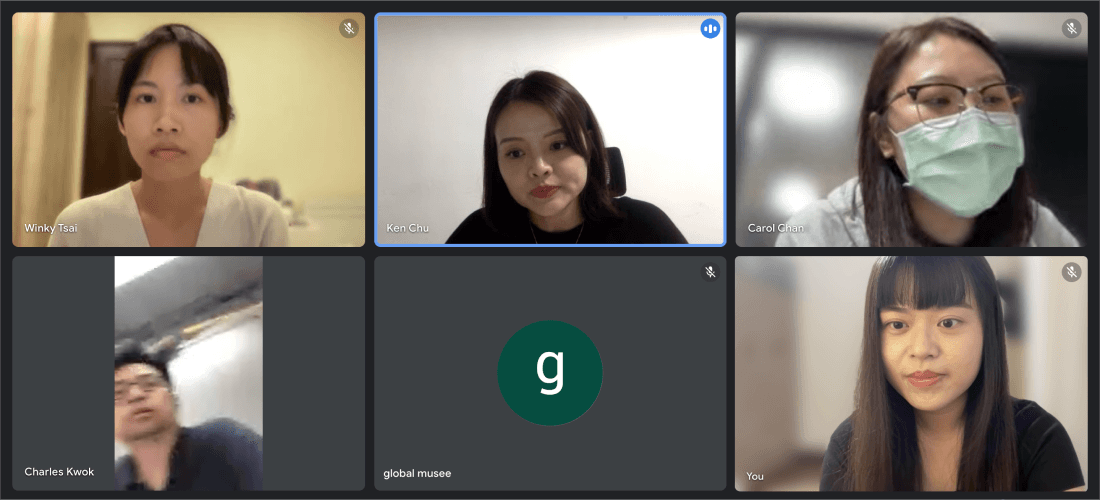
Users dropped off before experiencing the product, mainly due to uncertainty after submitting the trial request and waiting for manual follow-up.
Requiring users to re-enter basic information after a long wait created frustration and a strong desire to skip straight into the system.
Internal Sales and CS teams spent significant time answering the same questions and manually guiding users through early steps.
During the 14-day trial, many users failed to understand the product’s core value, limiting engagement and conversion.
The real problem was not just a long registration flow, but delayed access and unclear value delivery before users could experience the product.

Solution
Revamped the User Journey & Found More Opportunities
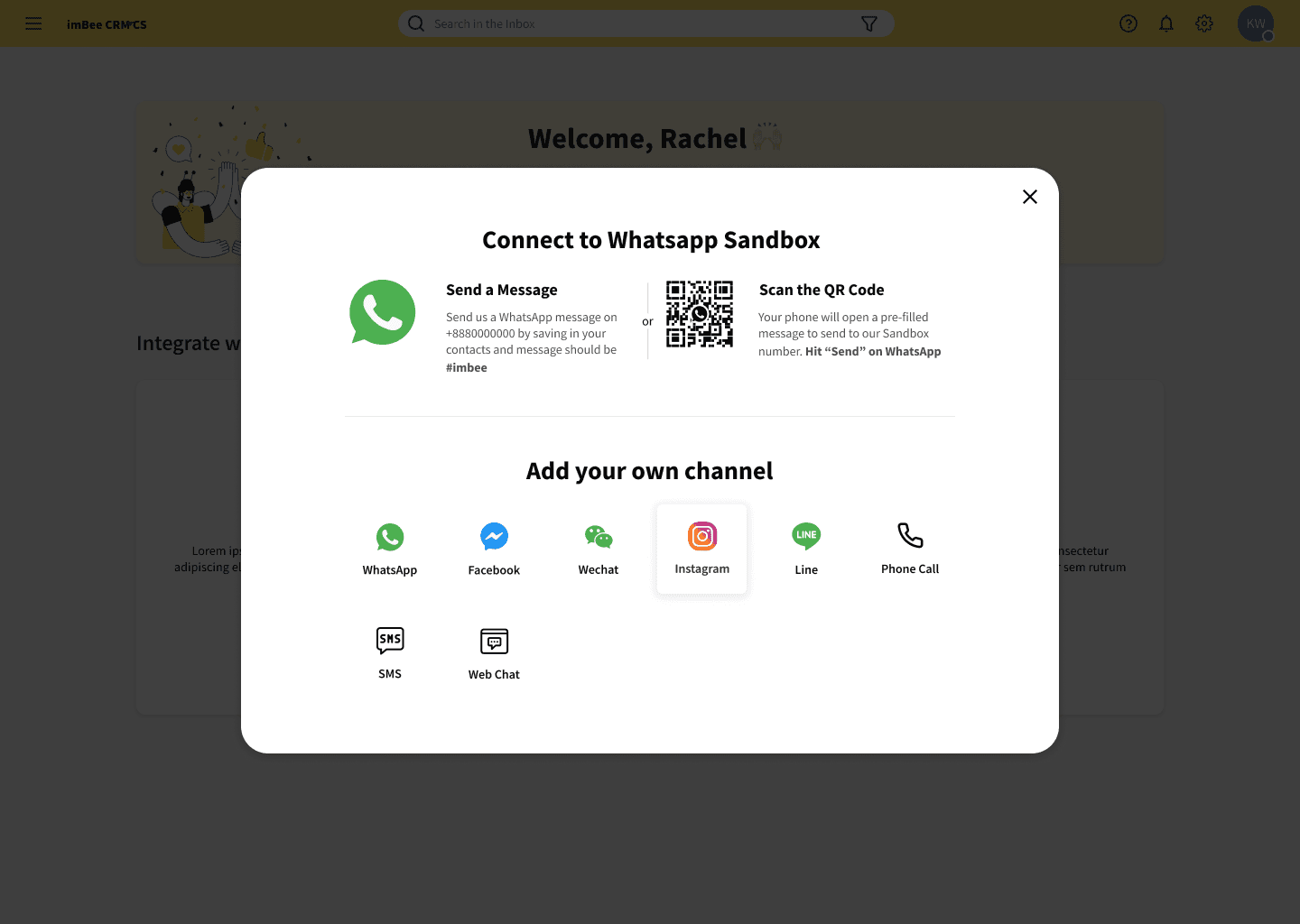
To meet our principles. I've managed to cut down the original 11 steps to 5, going from the imBee website right to self-registration. But, still and again. I popped all of these steps onto a user journey map, and had another peek to see if there's any room to amp it up even more.
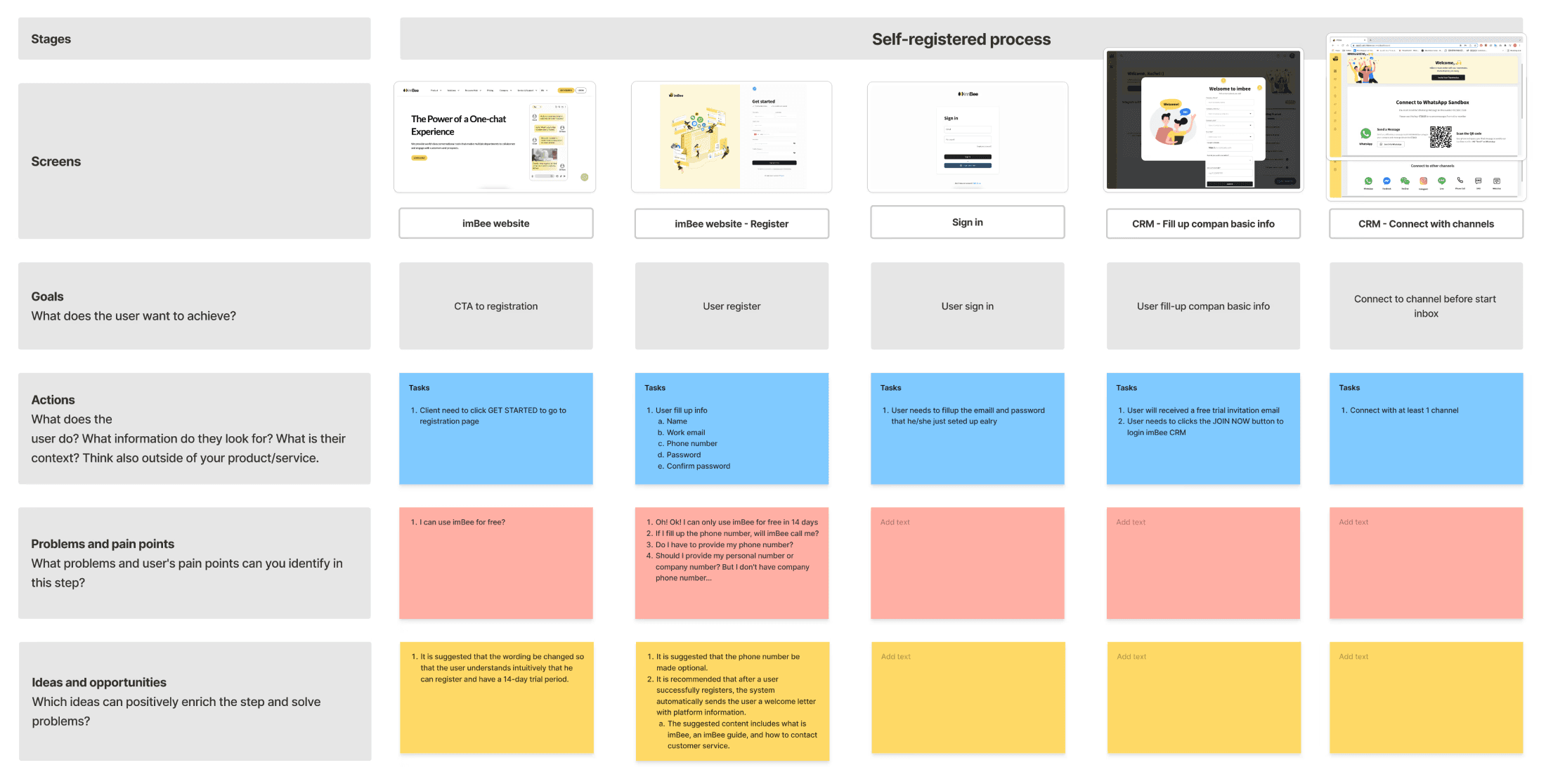
I didn't make any significant changes on visuals. Instead, I focused on details and provided more accurate information to the users based on business goals.
Impact
Due to timeline constraints, we validated the solution directly with real users by launching Phase 1, Version 4 of the self-service registration flow.
Reducing the registration flow from 11 steps to 5 resulted in a 77.11% increase in registration success rate, based on Mixpanel data from the first 30 days.
Simplifying the onboarding form reduced the drop-off rate to 33.33%, even with a relatively small event volume.
Customer Support teams confirmed a noticeable reduction in friction when assisting new users, validating the impact beyond quantitative metrics.
What’s Next
Feedback from CS teams showed that while registration friction was reduced, users still struggled to understand imBee’s core value during the trial period.
This reinforced our original discovery that faster access alone is not enough without clear value communication.
The next phase focuses on improving in-product guidance and value discovery, aligned with the phased rollout plan defined earlier.
Continue Reading
Interested in collaborating?
You’re probably looking for someone who can help make sense of complex product ideas.
That’s usually where I come in!
I like to break things down, explore a few directions quickly, and help teams move forward with clarity.
If this sounds like what you need, I’d love to chat :)
/Email me
guocianyu@gmail.com