Omnichannel Mobile App Redesign
Leading to a 26% increase in chat tool clicks, 10% more usage in team chat, and 5.3% more tab bar engagement.
Timeline
Jan to Feb 2022 (8 weeks)
Team
Product Designer: Me Product Owner: Me App Developer: Orion Lam
MY RoLE
Led the end-to-end product design process
Prioritized design scope based on user value and engineering effort
Standardized UI components for cross-platform consistency
Collaborated with developers to execute and refine design solutions
Overview
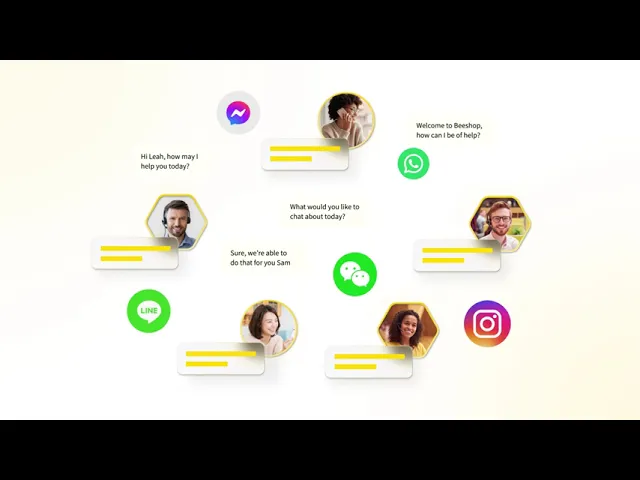
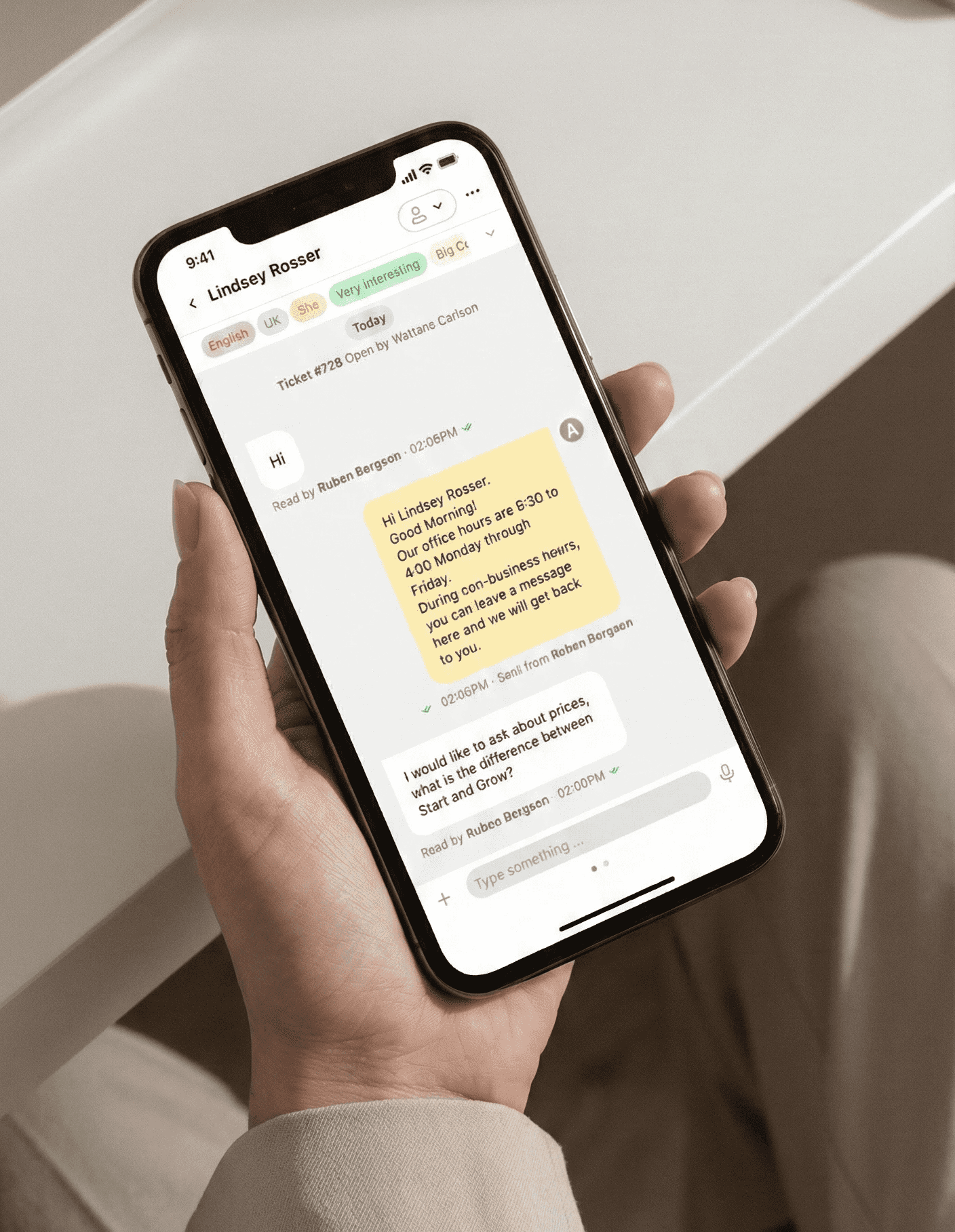
imBee is a B2B omnichannel messaging platform for managing client conversations across multiple chat apps.
As mobile usage grew, the app suffered from poor usability and high early drop off. Users struggled to navigate conversations and complete basic actions, leading to negative feedback and churn.
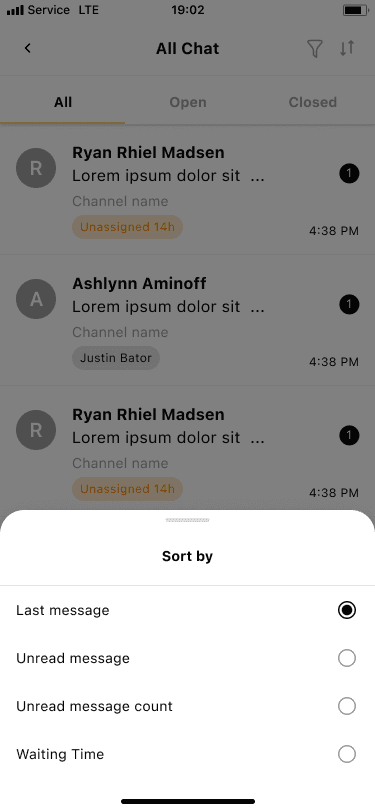
I led a full UX redesign focused on restructuring the information architecture and fixing core mobile interactions. After launch, Mixpanel data showed measurable impact, including a 10 percent increase in team chat usage and a 26 percent increase in chat tool engagement.
Challenge
The mobile app showed significantly lower engagement and retention than the web version. Users frequently dropped off after their first session due to unclear navigation and poor feature discoverability. The goal was to redesign the experience to improve clarity and drive at least a 5 percent increase in feature usage.
Discovery
Mobile disengagement was driven by trust and consistency issues, not visual quality.
• Users struggled to switch between web and mobile due to inconsistent interactions
• Mobile lacked critical workflows, making the product feel incomplete and unreliable
With only one app developer and myself, we had to prioritize for impact.
• UX inconsistencies offered high user impact with low development effort
• Adding new mobile features required high effort and risked delaying delivery
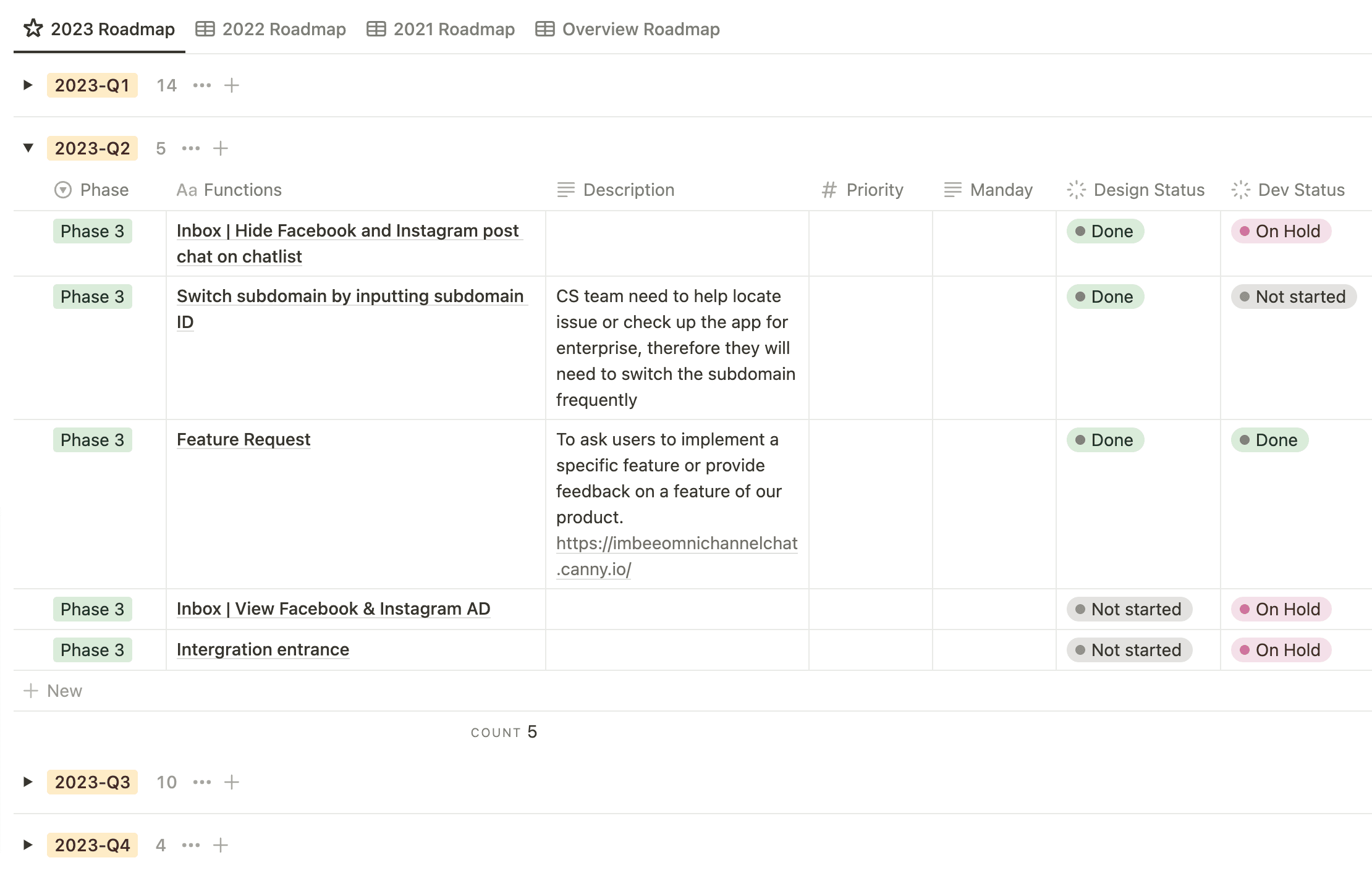
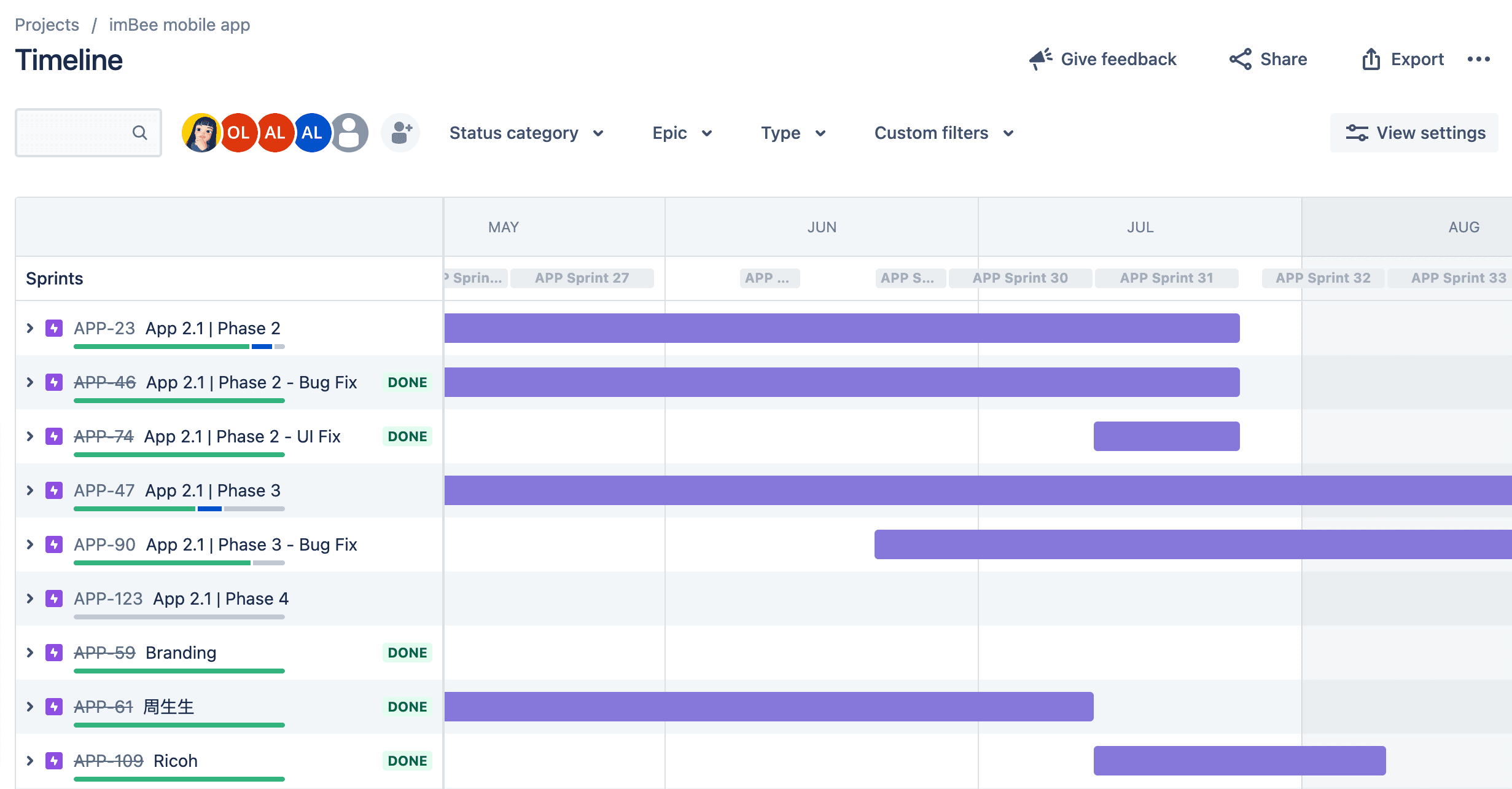
We chose to fix cross platform UX consistency first to quickly improve usability and trust.
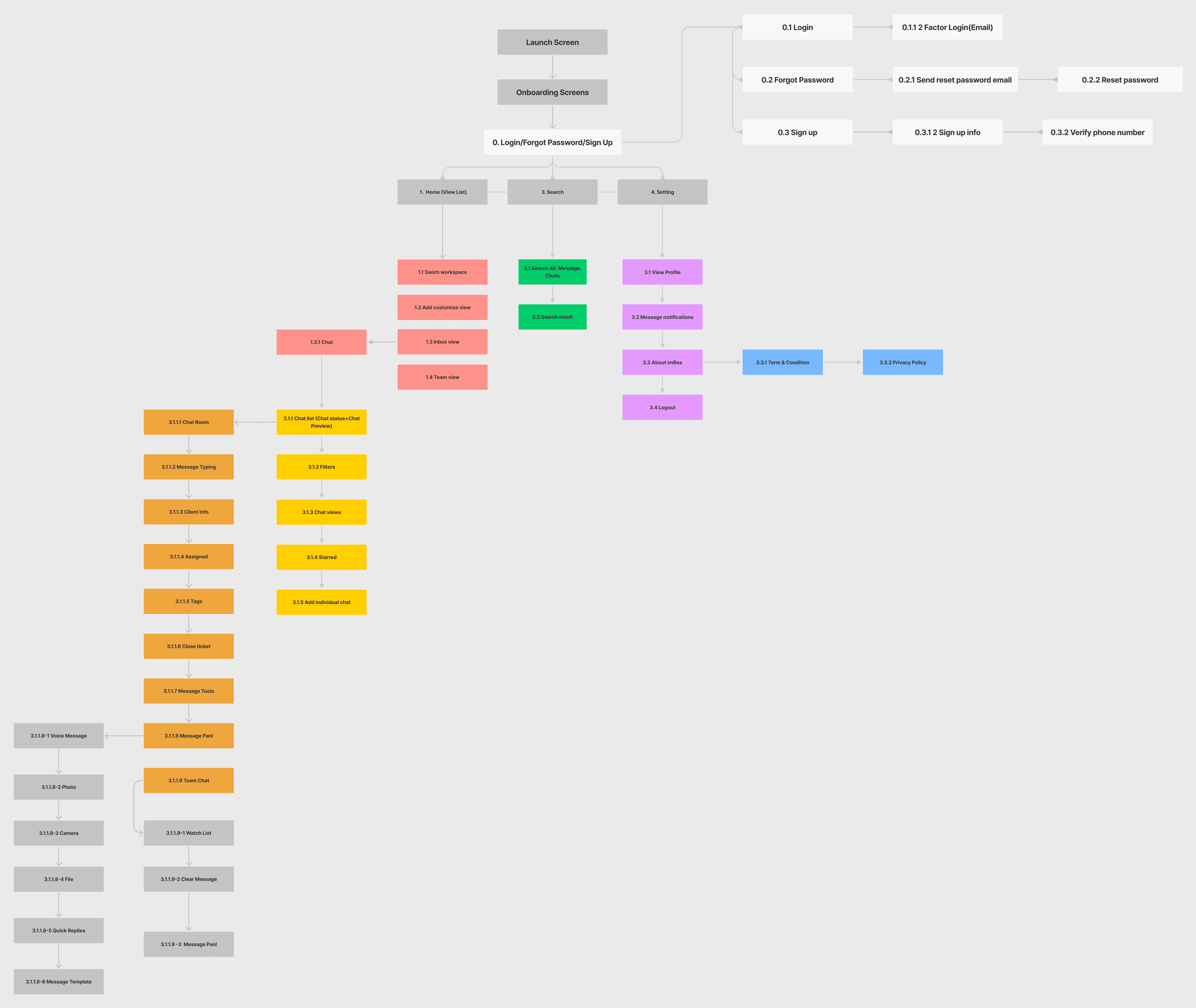
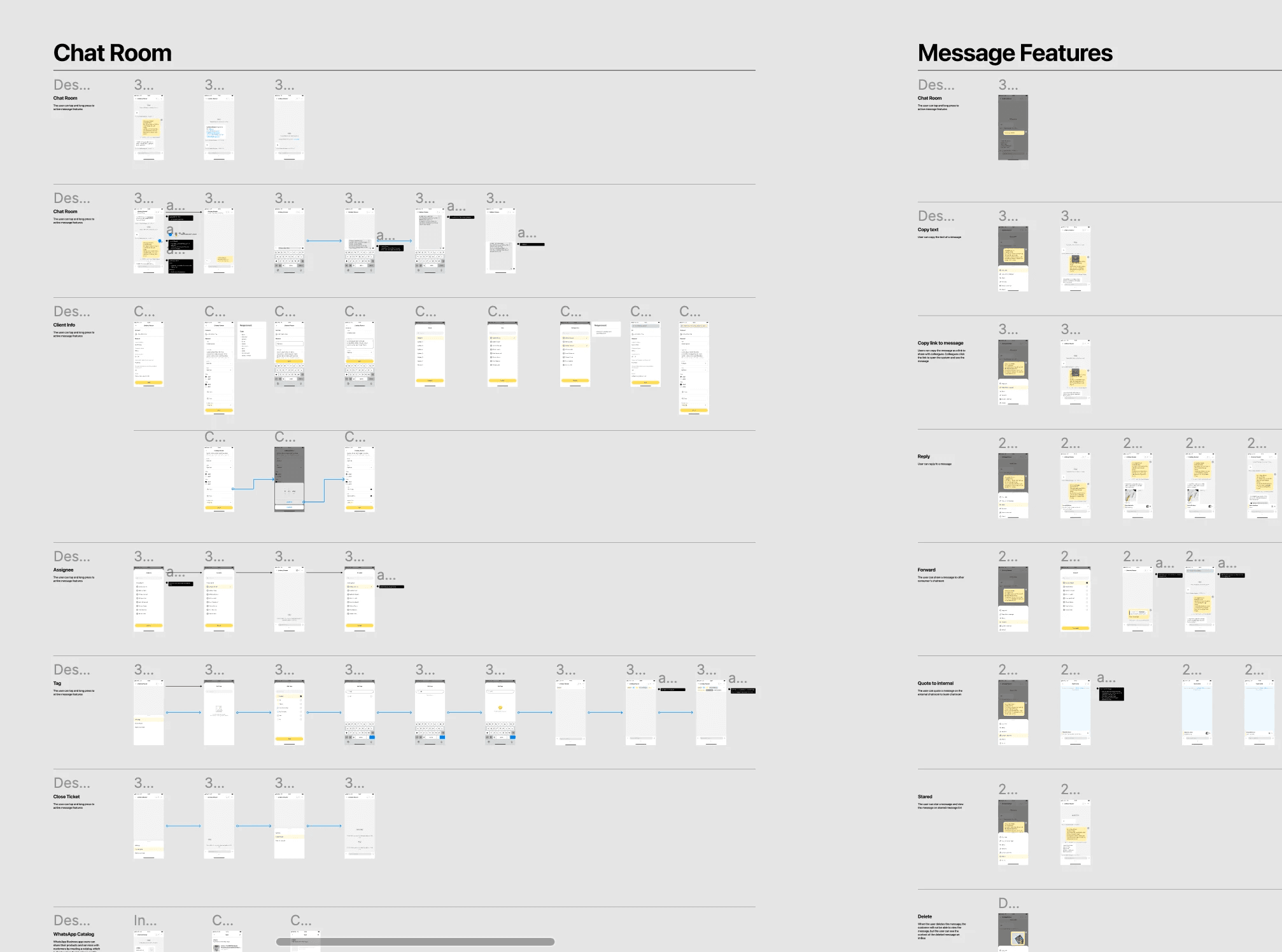
To align execution, I reverse engineered the live app, rebuilt the functional map, and standardized components and language. Each function was numbered and linked to Jira, reducing handoff friction and speeding up development.
Solution
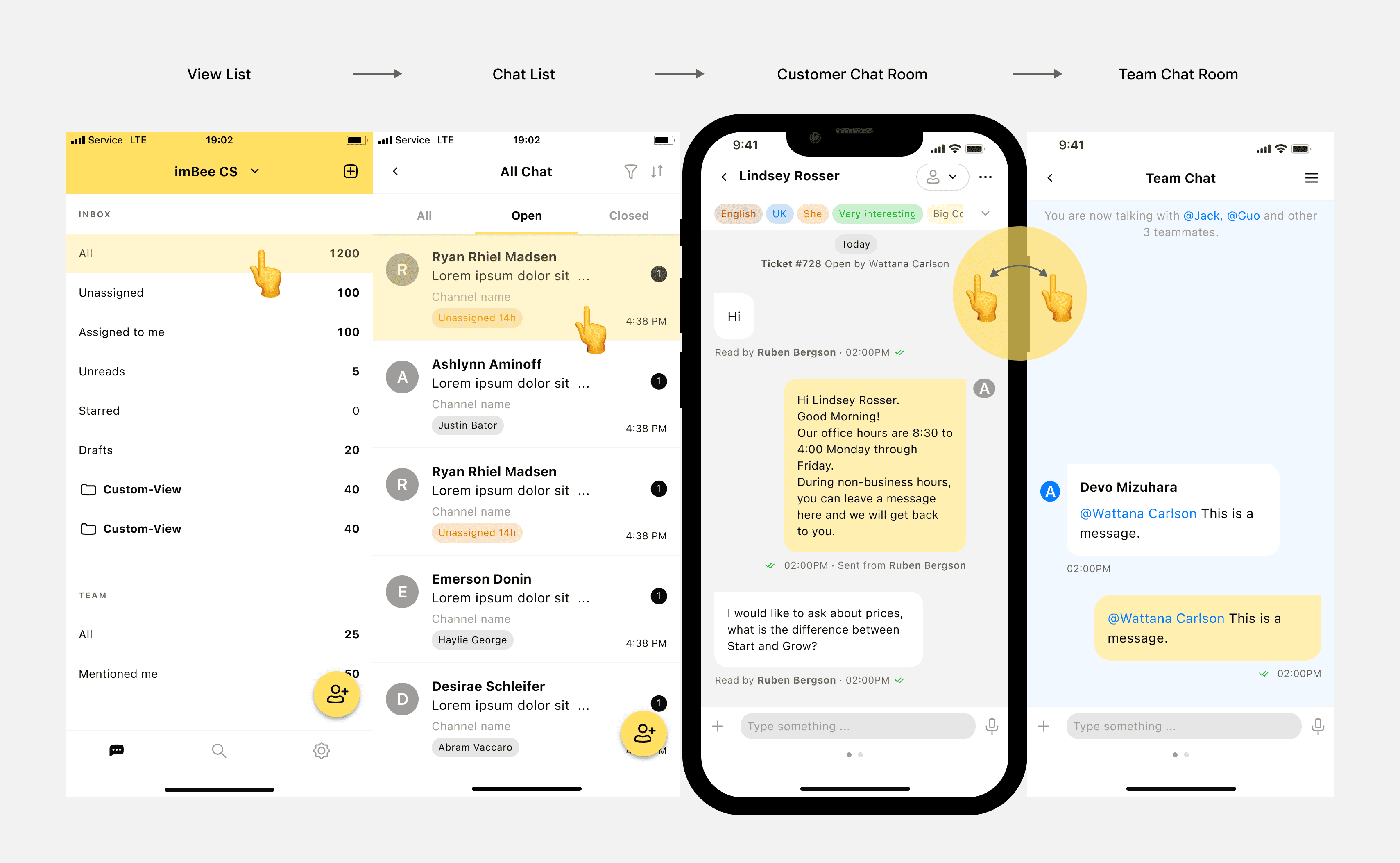
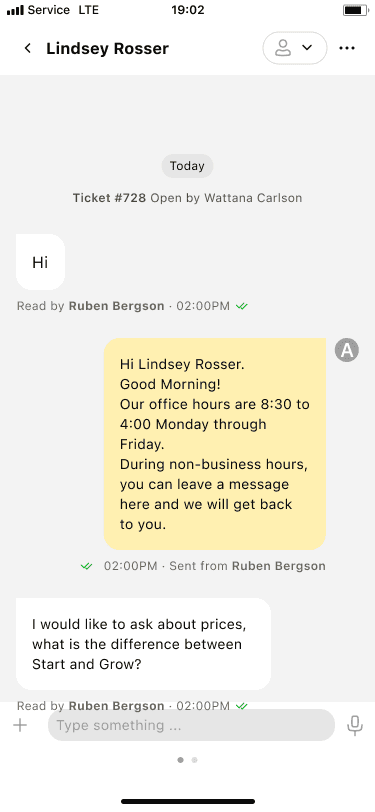
Swipeable Chatroom
Problem: Team chatroom was hard to discover and easy to tap by accident, frequently breaking conversation flow.
Decision: I restructured the chatroom hierarchy and introduced a progressive navigation pattern to clearly separate customer and team chatrooms.
Result: The relationship between chatrooms became immediately understandable, and accidental interactions were reduced through clearer visual and spatial separation.

Tab Bar Experience
Problem: Client tags overflowed into the chat area, disrupting reading flow and creating visual noise, especially with long or multiple labels.
Decision: I redesigned the tag bar into a collapsible, horizontally scrollable component that stays accessible without dominating the interface.
Result: Users could reference tags without losing chat context, while the UI remained clean and scalable across screen sizes.

More Accurate Tap Interactions
Problem: Message actions were hidden behind small, unreliable long-press targets, making them hard to discover and trigger.
Decision: I expanded the tap area to the full message row and reordered actions by usage frequency, prioritizing Reply and Star.
Result: Message actions became easier and faster to access, particularly on small screens and high speed chat scenarios.

Impact
The redesigned mobile experience was released to production after internal validation. While the new chatroom switch required brief user adaptation, Mixpanel data showed clear positive impact.
• +26 percent increase in chat action tool usage
• +10 percent increase in team chat activity
• +5.3 percent increase in tab bar interactions
Users stayed longer and engaged in more conversations, validating the UX direction and prioritization strategy. Based on these results, the next step is to introduce high value web features to mobile and refine the chatroom switch with lightweight onboarding cues.
Continue Reading
Interested in collaborating?
You’re probably looking for someone who can help make sense of complex product ideas.
That’s usually where I come in!
I like to break things down, explore a few directions quickly, and help teams move forward with clarity.
If this sounds like what you need, I’d love to chat :)
/Email me
guocianyu@gmail.com